Stuck With a Long Layover in Hefei? Here's How to Actually See the City in 24 Hours
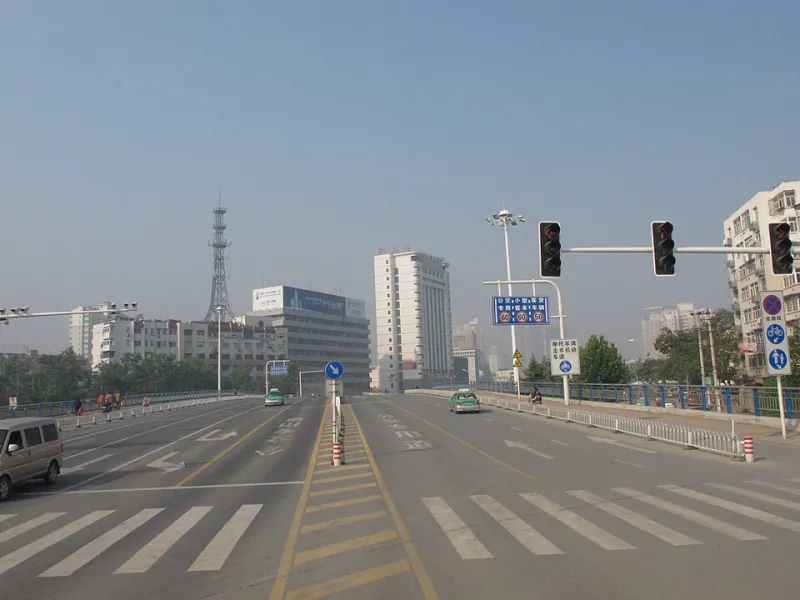
Photo: 江上清风1961, CC BY 3.0, via Wikimedia Commons
If you're connecting through Hefei Xinqiao International Airport or changing trains at Hefei South, you've probably been told the same thing: "Hefei? There's nothing there." As someone who moved here on purpose, let me gently call that what it is — a rumor spread by people who never got off the platform.
Hefei won't give you Beijing's postcard Great Wall shot or Shanghai's skyline flex. What it gives you instead is something arguably more valuable on a layover: a real, working Chinese city where you can eat a great breakfast, walk a lake, see a world-class museum, and get back on your train without ever feeling lost. Think of it as "just enough of China" in one day — the sampler plate.
Here's exactly how to do it.
Before You Go: The Luggage Question
Your first move is ditching the suitcase, because dragging a roller bag through a noodle shop is nobody's idea of fun.
- At the airport: Xinqiao has left-luggage counters near the arrivals hall. Expect to pay somewhere in the range of 20–30 RMB per bag for the day. Cash is hit-or-miss, so have Alipay or WeChat Pay set up before you land (link a US card in advance — it takes five minutes and saves you hours).
- At Hefei South Railway Station: The service centers near the departure halls offer storage as well. Prices are similar.
- Pro move: If your connection is under six hours and you're flying on one ticket, check whether your bags are checked straight through. Many are, which means you walk out of the terminal with nothing but a daypack.
Once your bags are stashed, follow the signs to the metro. Line S1 now connects the airport toward the city, and from there the rest of the day is a breeze. Buy a single-ride ticket at the machine (there's an English option) or just tap through with your phone. Rides run 2–5 RMB. Yes, really.
Morning: Do Breakfast Like You Live Here
Skip the hotel-adjacent coffee chains. Your first meal in Hefei should be at a proper local breakfast spot, and the easiest introduction is the humble baozi and soy milk combo.
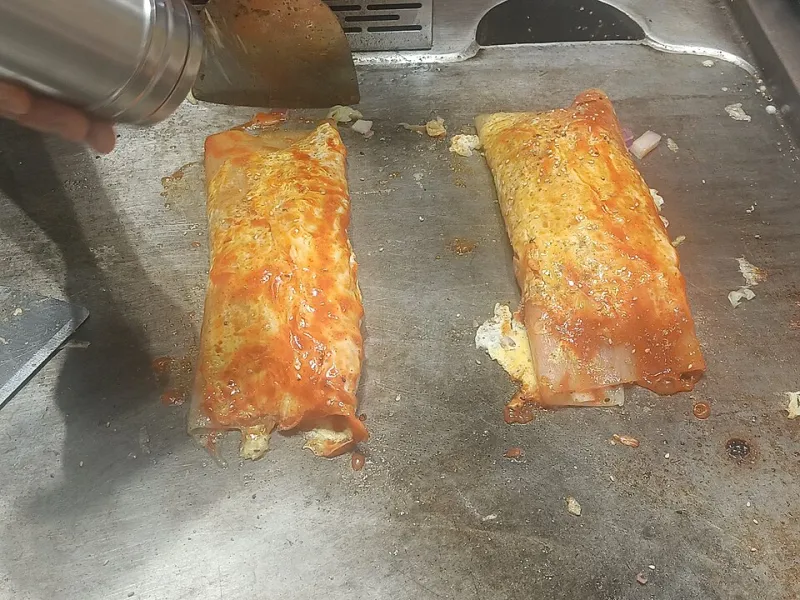
Head toward the area around Sanlij An or the Old City (Xiaoyaojin) neighborhoods — the metro drops you within a block of dozens of small shops with steaming bamboo baskets in the window. Point at what looks good; the aunties behind the counter have seen worse Mandarin than yours. A pork baozi, a savory shengjian (pan-fried bun), and a hot doujiang (soy milk) will run you about 15 RMB total. That's roughly two bucks for the best breakfast decision of your trip.
If you're coffee-dependent (no judgment, fellow American), Hefei has Luckin and Cotti on nearly every corner, plus a growing handful of independent cafés near the universities. Grab a latte to-go and consider yourself caffeinated like a local.
Late Morning: Xiaoyaojin Park and the Art of Doing Nothing
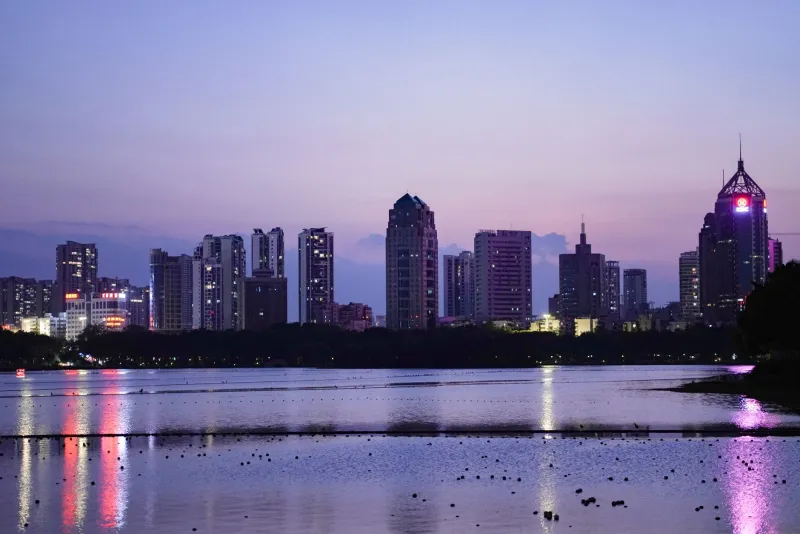
From breakfast, walk or hop one metro stop to Xiaoyaojin Park. This is where Hefei goes to breathe. Retirees practice tai chi, grandpas fly kites that look like they could achieve liftoff with a passenger aboard, and the lake reflects exactly the kind of everyday China that never makes the travel brochures.
There's real history here too — the park sits on the site of an ancient Three Kingdoms battlefield, and a small monument marks the spot where the famed general Zhang Liao allegedly held off an army ten times his size. Your 24 hours now include a Three Kingdoms war story. You're welcome.
Budget 45 minutes to an hour. Sit on a bench. Watch the morning unfold. This is the part of the layover no itinerary usually allows, and it's the part you'll remember.
Afternoon: Anhui Provincial Museum
Now for the heavyweight. The Anhui Provincial Museum (new building, near Swan Lake on the east side, accessible via Line 3 to the Museum station) is genuinely one of the better provincial museums in China, and it's free with a passport-based reservation you can make through the WeChat mini-program — or often just by showing your passport at the desk on slower days.
What to see if you're short on time:
- The Huizhou architecture and woodcarving exhibits — intricate, hand-carved building panels that will recalibrate what you think craftsmanship means
- The bronze and jade collections, including pieces older than the Roman Empire
- The famous Wenfang Four Treasures displays, covering the brush, ink, paper, and inkstone tradition — Anhui is ground zero for this stuff
Give it 90 minutes to two hours. English signage is present, if occasionally charmingly approximate.
Lunch: One Last Bowl Before the Train
You cannot leave Anhui without eating noodles, and you don't need to go far. Around the museum and throughout the city center you'll find beef noodle shops (牛肉面) and the local Anhui-style noodle houses where a heaping bowl of hand-pulled noodles in broth costs 15–25 RMB.
Can't read the menu? Point at the bowl on the next table. It works. It has always worked. If you want to be adventurous, look for chou guiyu (smelly mandarin fish) on any menu — it's Anhui's signature dish, fermented on purpose, and it tastes far better than it smells. A layover is exactly the time to take that swing.
The Math on Your Day
- Breakfast: ~15 RMB
- Metro all day: ~15 RMB
- Museum: free
- Noodles: ~20 RMB
- Total: roughly $7 USD for a full day of eating, history, and park-strolling
Compare that to a day of airport sandwiches and Wi-Fi purgatory.
Getting Back and Timing It Right
Build in buffer. The airport line takes about 40–50 minutes from the city center, and Hefei South to the airport by metro is similar. For a flight, be back 2.5 hours before departure; for a train, 45 minutes. Everything above fits comfortably into a 10–12 hour layover with room to spare.
And if you only have six hours? Do breakfast and Xiaoyaojin Park, skip the museum, and head back. Even that half-version beats the terminal.
The next time your booking engine routes you through Hefei, don't groan. Stash the bag, tap onto the metro, and go eat something steaming. This "boring" city has been quietly waiting for you to get off the train.