Skip the Tour Group: How to Reach Huangshan and Hongcun From Hefei With Nothing But a Phone and a Train Ticket
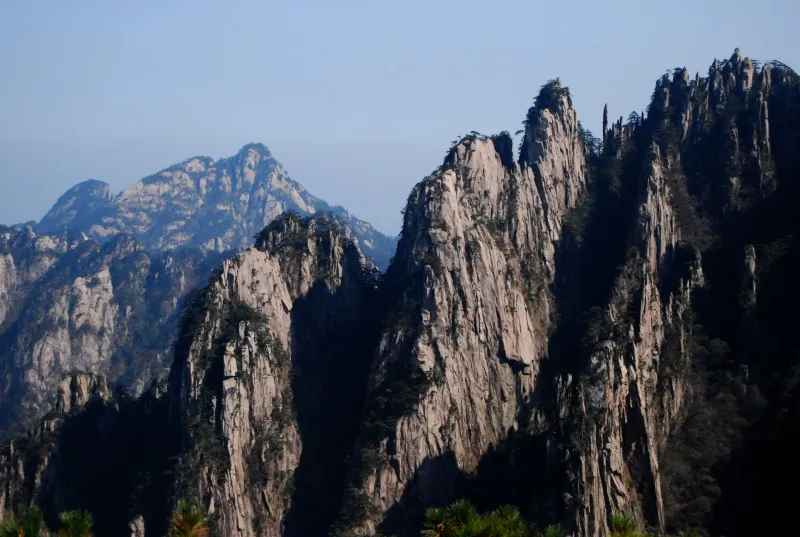
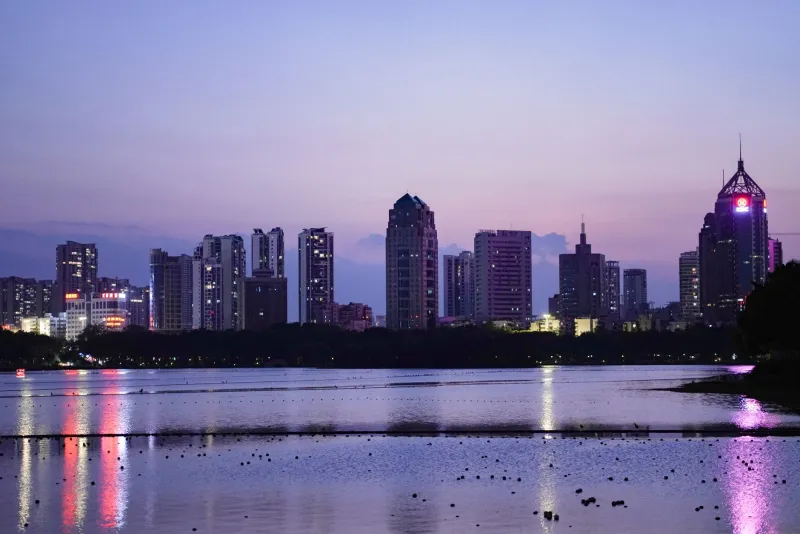
Somewhere around month five in Hefei, a switch flips. Swan Lake is lovely, sure, but you start eyeing the horizon thinking, there has to be more than this. There is. It's called Huangshan — Yellow Mountain — and it's roughly three hours away by high-speed rail, along with a cluster of ancient villages that belong on any short list of the most beautiful places in China.
The catch: almost nothing along the way is signed in English. The good catch: you genuinely don't need a travel agent. You need a couple of apps, an early alarm, and the willingness to point at things. Here's how it actually works.
Step One: The Train to Tunxi (It's the Easy Part)
Open Trip.com or the 12306 app and search for trains from Hefei South (合肥南) to Huangshan North (黄山北). Multiple departures daily, most taking about two to three hours, and second-class seats usually run somewhere in the 150–200 RMB range — think of it as an Amtrak Acela ticket that's actually on time.
Book a few days ahead for weekends, further out for the national holidays (May Day and Golden Week in particular — don't. Just don't. Every person in Anhui will be on that train with you).
The station name confuses people: you're not going to the mountain itself. Huangshan North is in Tunxi, the main city of the region, and from there you'll connect onward by bus or car. Which brings us to the hard part.
Step Two: The Bus Station Gauntlet
Huangshan North station has a bus terminal attached, and this is where your Chinese reading skills — or lack thereof — meet reality. The buses to the mountain's scenic area (Tangkou, 汤口) leave regularly, and tickets are cheap, but signage is Chinese-only and staff may not speak English.
Your survival kit:
- A translation app with camera mode (Google Translate works offline if you download the Chinese pack; Pleco is even better for characters)
- A screenshot of the characters 汤口 saved in your phone — show it to anyone in a uniform and you'll get pointed the right way
- Cash or a linked Alipay/WeChat Pay — the ticket window doesn't care about your excuses
Honestly? A lot of expats skip this step and split a DiDi (China's Uber) from the station to Tangkou. It costs more — maybe 150–250 RMB — but for a group of three or four it's a wash, and it removes the single most confusing hour of the trip.
The Mountain Itself: Worth the 4 A.M. Start?
Short answer: yes. Longer answer: yes, but manage your expectations about crowds.
Huangshan is famous for three things: granite peaks poking through seas of clouds, absurdly resilient pine trees growing out of solid rock, and a cable car queue that would make a Disney World veteran nod with recognition. Get there when the park opens — that means staying in Tangkou the night before and being in line by 7 — and you'll ride up in relative peace. Show up at 11 a.m. on a Saturday and bring a book for the line.
Once you're up top, the network of stone paths is genuinely world-class. The classic loop takes four to six hours depending on how many photo stops you make (you will make many). You can descend by cable car or, if your knees are feeling patriotic, walk down about a zillion steps.
Two practical notes Americans always ask about:
- Bring snacks. Food on the summit is priced like an airport, because it basically is one.
- Weather is the whole show. Fog rolls in fast. Sometimes you see the famous cloud sea; sometimes you see a gray wall. Check the forecast, and if it's bad, pivot to the villages instead. Nobody flies home raving about fog.
Hongcun: The Village That's Better Than the Postcards
If you only have one non-city day, some would argue Hongcun (宏村) beats the mountain. It's the UNESCO-listed village with the moon-shaped pond that's appeared in more paintings and films (hello, Crouching Tiger, Hidden Dragon) than any other hamlet in China.
Getting there from Tunxi is about an hour by bus or DiDi. The entrance fee is around 100 RMB, and it's worth going early or late — midday tour groups pour in like a tide. Stay overnight if you can: once the day-trippers leave, the village turns into lantern-lit lanes and locals playing cards outside their Ming-dynasty doorframes. Guesthouses inside the walls run surprisingly cheap, often under 300 RMB for a decent room.
Xidi (西迪), a similar village twenty minutes away, gets a fraction of the crowds and is a fine alternate if Hongcun feels too busy.
A Realistic Weekend Plan
Here's the version I'd hand a friend:
- Friday night: High-speed train to Huangshan North, taxi into Tunxi, dinner on the old town pedestrian street (try the stinky mandarin fish if you're brave — it's the region's signature and yes, it smells like that on purpose)
- Saturday: Early bus or DiDi to Tangkou, cable car up Huangshan, full day of walking, cable car down, sleep in Tangkou
- Sunday: Morning in Hongcun, afternoon train back to Hefei, home by dinnertime Monday-ready
Tight? A little. Doable without a word of Chinese? Completely.
The Grit Part
Nobody tells you this, but the real skill isn't translation apps — it's tolerance for small frictions. The bus that leaves when it's full, not when the schedule says. The guesthouse confirmation that's a WeChat voice message. The lunch where you point at the next table's food and hold up two fingers. That's not a failed trip; that's the trip.
And when you're standing on a granite peak watching clouds pour through the valleys below, every confusing bus terminal will feel like a fair price of admission. Hefei's not just a place you live. It's a launchpad. Go use it.