The Great Haircut Gamble and Other Everyday Errands, Solved
Somewhere around week six in Hefei, the novelty of the adventure wears off and reality sets in: your hair is getting shaggy, your coat button is dangling, and you have no idea how to ask anyone to fix any of it.
Back in the States, these errands ran on autopilot. Here, they feel like mini diplomatic missions. The good news? They're all winnable, and winning them — really winning them, like walking out of a barbershop with the cut you actually wanted — is one of the quiet joys of expat life.
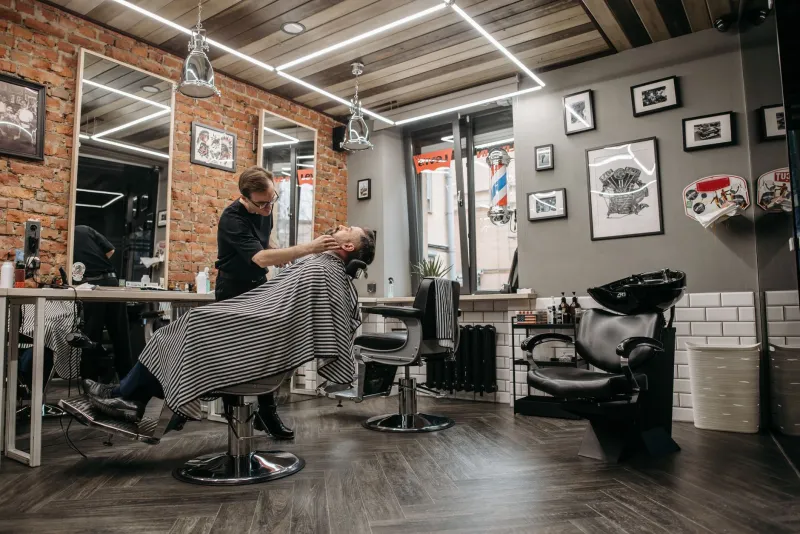
The Haircut: Hefei's Most Affordable Gamble
Let's start with the big one. A basic men's haircut in Hefei can run you 25 to 60 RMB — roughly what a fancy coffee costs back in Ohio. Women's cuts and styling cost more but still land well below US prices.
The catch, of course, is communication. "Just a trim" is a phrase that requires a surprising amount of shared vocabulary.
Your survival kit:
- A photo. This is 90% of the battle. Pull up a picture of the cut you want on your phone and show it at the door. Barbers will nod, pinch the length between their fingers to confirm, and get to work.
- The number system. If you want clippers on the sides, learn the shorthands: numbers refer to guard lengths (3 hao, 6 hao, etc.). Holding up fingers works too.
- The magic phrase. "Xiu yixia" (just tidy it up) is genuinely useful. So is "bu yao tai duan" — don't make it too short — which you'll want to say early and often.
A word of warning from personal scar tissue: Chinese barbershops default to shorter and more styled than their American counterparts. If you ask for "a little off the top," you may receive a lot off the top. Overcommunicate length. Point to your ear and gesture "stop here."
One quirk to embrace: many shops include a head massage and hair washing as standard. It's disorienting the first time, delightful by the third.
Finding the Right Shop with Dianping and Meituan
You don't have to wander the streets gambling on storefronts. Dianping (part of the Meituan ecosystem) is China's Yelp, and it's your best friend here.
Search for "理发" (lǐfà, haircut) and you'll get a ranked list of nearby shops with photos, prices, and reviews. Yes, it's all in Chinese — set your translation app to live camera mode and hold it up to the screen. Look for shops with ratings above 4.0 and recent reviews mentioning foreign customers; some barbershops near universities are used to non-Chinese speakers and will have a photo book ready.
Through Meituan, you can often buy a discounted voucher for a specific service and show the QR code at the counter. No conversation required. It's the closest thing to a friction-free errand you'll find.
Dry Cleaning: The Laundromat That Isn't
That wool coat you brought from Chicago? It needs professional cleaning eventually, and Hefei has plenty of dry cleaners (洗衣店, xǐyīdiàn) tucked into residential compounds.
The process is mercifully simple: hand over clothes, receive a ticket, return in a few days with the ticket. The ticket is the whole transaction — no small talk necessary. Prices are typically 15 to 40 RMB per item depending on the garment.
Two tips:
- Photograph the ticket. Losing it means an awkward negotiation, and photographing any receipt is a good habit in China generally.
- Point at stains. If something needs spot treatment, use your translation app to write "this stain, please remove" and gesture at the offending area. It works better than you'd expect.
Shoe Repair, Key Cutting, and the Small-Stuff Economy
Here's where Hefei genuinely shines. That cobbler who re-heel your boots for 15 RMB? He's been doing it for thirty years and will have them back in a day. Key cutting stalls (配钥匙) — often just a man with a grinding machine under an awning — will duplicate a key in five minutes for pocket change.
These micro-businesses don't advertise and aren't always on the apps. You find them by walking your neighborhood with your eyes open. Look for clusters of small stalls near market entrances and residential gates.
For communication, the universal toolkit applies:
- Bring the broken thing. A snapped zipper, a wobbly chair leg, the item itself communicates more than any phrase.
- Mime the failure. Act out the problem. It feels ridiculous. It works.
- Use your translate app's written mode. Type it in English, show the Chinese characters. Older shopkeepers often read better than they speak English.
Tailors: The Sleeper Service
If you're tall, broad, or simply not shaped like the local sizing charts assume, a tailor is a revelation. Off-the-rack clothes that almost fit can be taken in for 30 to 80 RMB. Some tailors will copy a favorite shirt outright if you bring it as a template.
Find them through Dianping (search 裁缝, cáiféng) or ask a Chinese colleague — personal recommendations matter enormously here, and people are genuinely happy to help.
The Mindset That Makes It All Work
Every one of these errands follows the same arc: awkward approach, fumbling communication, a moment where both of you commit to figuring it out, and then success. The pointing, the photos, the app held up like a peace treaty — it becomes second nature faster than you'd think.
And here's the thing nobody tells you: the day you walk into your neighborhood barbershop and the barber just nods and starts cutting, because he already knows your cut? That's the day Hefei stops feeling foreign. Small victories, indeed.