Alarm Clocks, Ancient Bronzes, and One Very Confusing Basement: Hefei's Weirdest Museums, Ranked
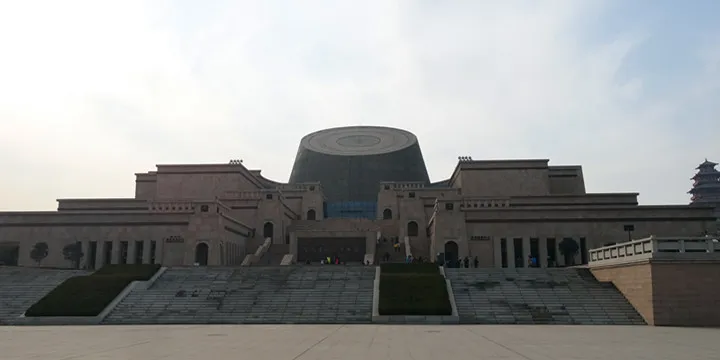
Photo: Baomi, CC BY-SA 4.0, via Wikimedia Commons
So you've been in Hefei for a few months. You've got your go-to noodle spot, you know which exit at the metro station actually spits you out closest to your apartment, and you've taken every visiting friend to Swan Lake. Congratulations — you've completed the tutorial level of expat life.
Now it's time for side quests. And Hefei's museum scene is full of them.
Start With the Heavyweight: Anhui Museum
Let's get the famous one out of the way first, because it genuinely earns its reputation. The Anhui Museum (new building, in the Government Culture District near Swan Lake) houses some seriously impressive Chu-state bronzes — we're talking 2,000-plus-year-old ritual vessels with enough detail to make a Smithsonian docent sweat.
Bring your passport for entry, go on a weekday morning if you can, and expect a security check on par with an American airport. The good news: some exhibits have English captions. The bad news: some very much don't, which is where your translation app of choice becomes your best friend. More on that in a minute.
The Weird Stuff (Why You're Actually Here)
Once the headline museum is checked off, Hefei rewards the curious with a handful of smaller, stranger collections:
- The Hefei branch of niche horology. Tucked into the city's museum ecosystem are small collections dedicated to clocks and watches — hundreds of ticking timepieces, from ornate Chinese pieces to mid-century oddities. It sounds boring until you're standing in a room where every surface is measuring time, and then it's unexpectedly moving.
- Former residences of the famous. Hefei's most-visited "museum" is arguably the childhood home of Li Hongzhang, the Qing dynasty statesman whose name is all over the pedestrian street downtown. It's small, cheap, and a genuinely good crash course in why this city punches above its weight historically.
- Revolutionary history museums. Anhui was central to China's revolutionary era, and several modest museums around town document it with the earnest, dense presentation you'd expect. The Chairman Mao memorabilia you'll encounter — statues, badges, portraits — can be jarring for American visitors, but it's presented matter-of-factly, as history, and worth seeing with an open mind.
The Language Barrier Is a Feature, Not a Bug
Here's the honest truth: at most of the smaller museums, you will not understand a word of the captions. And that's okay.
Your toolkit: download a translation app with camera functionality before you go. Point your phone at the placard, and a rough English version appears in seconds. Will it be perfect? No. Will "this bronze vessel was used to store sacred millet during ancestral rites" sometimes come out as "ancient pot for happy rice"? Absolutely. But you'll get the gist, and honestly, the gist is usually enough.
The other trick is to simply look. Museums here are wonderfully visual — the objects themselves, the dramatic lighting, the occasionally hilarious mannequin poses. Treat it like a gallery, not a textbook.
The Practical Bits
- Tickets: Most state-run museums are free, but many require advance booking through WeChat mini-programs. If your Chinese is limited, ask a colleague or your friendly neighborhood baozi shop owner to help you book — this is a great excuse for a small social win.
- Closed Mondays. Nearly universally. Don't learn this the hard way like I did.
- Passport required for entry at the bigger institutions.
- Getting there: The metro covers most of these. Anhui Museum is a short walk from a Swan Lake-area station; Li Hongzhang's residence is right off the downtown pedestrian street, which conveniently pairs the visit with lunch.
Make It a Challenge
Here's my proposal for your next free weekend: hit two museums in one day. Morning at Anhui Museum, lunch nearby, afternoon at Li Hongzhang's residence followed by a stroll down the pedestrian street. Total cost? Roughly the price of a latte back home.
Is Hefei the Louvre? No. But it's a city with real history, genuinely odd corners, and museums where you'll often be the only foreigner in the building — which, depending on your personality, is either awkward or awesome. (It's awesome. Trust me.)
You moved across the Pacific to a city most Americans can't pronounce. You might as well know what all those statues in the parks are about.